
Services
Raised Beds in East Yorkshire
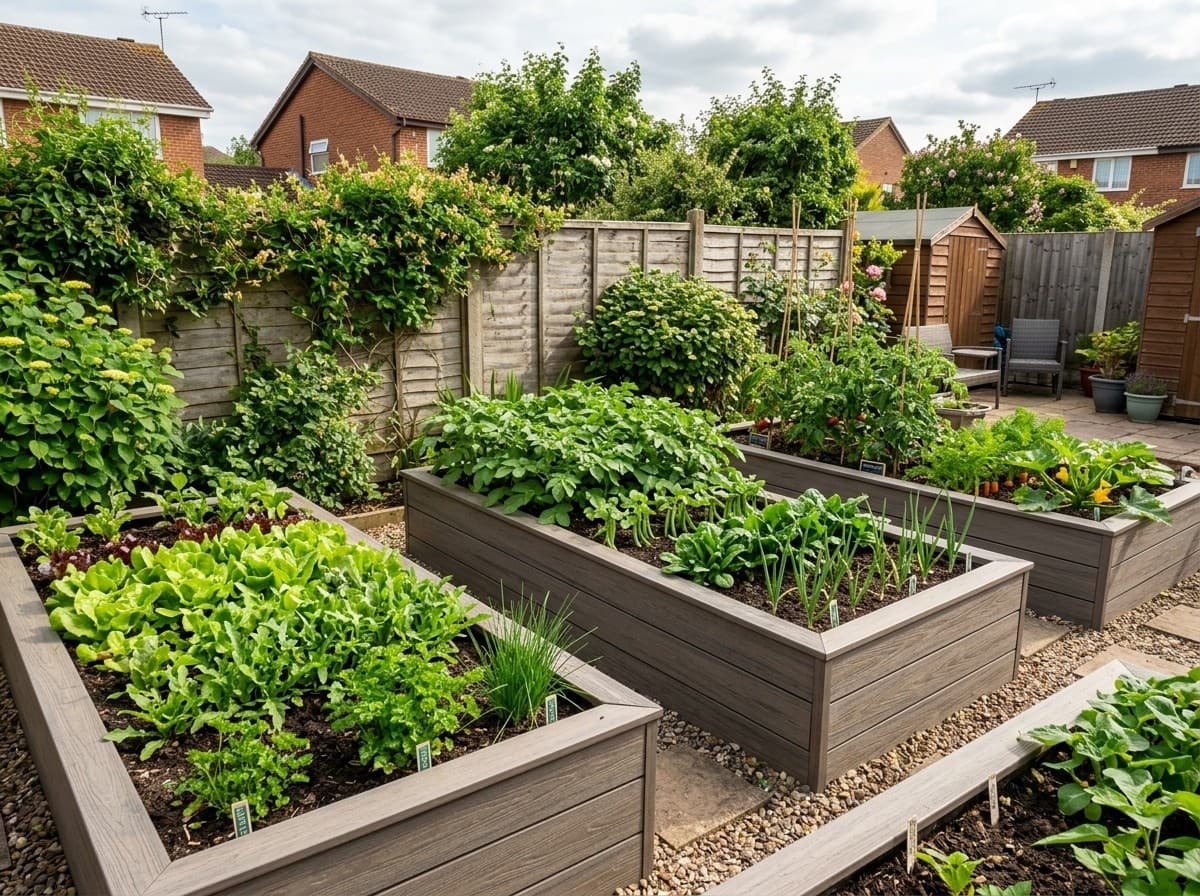
Raised beds bring planting up to a more accessible height, improve drainage in heavy East Yorkshire clay soils, and give a kitchen garden or ornamental border real definition. Evergreen Landscaping builds raised beds in timber, railway sleepers, natural stone, and brick — designed and built to suit the garden's character and the client's planting plans.
Why raised beds solve East Yorkshire's clay problem
Growing vegetables or ornamental plants directly in East Yorkshire clay can be a frustrating experience — the soil compacts, drains slowly, and warms up late in spring. Raised beds break this dependency. Filled with good-quality topsoil and compost mix, they drain freely, warm up earlier, and can be worked without compacting the growing medium. This makes raised beds a genuinely practical improvement in East Yorkshire gardens, not just an aesthetic one.
Sleeper raised beds: robust and characterful
Reclaimed railway sleepers and new green oak sleepers are our most requested raised bed material. They bring a natural, substantial feel to a kitchen garden or cutting bed, and their mass means they don't move or flex once stacked. Sleepers can be stacked single, double, or triple height depending on the intended use — taller beds are particularly practical for anyone who finds bending to ground level difficult. We use a corner-fixing system that holds sleepers firmly without exposed metalwork on the surface.
Natural stone and brick raised beds
Where a garden features existing stonework, paving, or brick boundaries, raised beds in matching or complementary materials tie everything together. Natural stone raised beds — built in limestone, sandstone, or millstone grit depending on the garden's character — sit beautifully in period East Yorkshire gardens and cottage-style settings. Brick raised beds, built in a matching bond to the house, give a more formal structured look suited to Georgian and Victorian properties.
Drainage and lining
A raised bed without drainage provision becomes waterlogged in East Yorkshire winters just like the ground beneath it. We incorporate a layer of coarse gravel at the base and, where a raised bed sits directly on clay, we can break through the clay at several points to allow water to escape. A heavy-duty polythene or geotextile lining inside timber beds protects the structural timber from constant contact with damp soil, extending the life of the bed significantly.
Sizing and layout for your garden
Raised beds should be no wider than you can comfortably reach to the centre from either side — typically 1.2m maximum — so the growing space can be maintained without stepping on the bed and compacting the soil. We discuss layout during the site visit: path widths between beds, bed heights, and how the whole scheme fits the available space and connects with existing features.
How We Work
- 1
Free site visit and quote
Andy looks at the space, discusses materials and layout, and provides a written quote.
- 2
Ground preparation
The area is levelled, and drainage provision (gravel layer, clay breakthrough) is prepared.
- 3
Bed construction
Beds are built in the chosen material — sleepers stacked and fixed, stone laid in mortar, brick built in bond.
- 4
Lining and soil
Liner is fitted inside timber beds, and beds are filled with quality topsoil and compost mix.
- 5
Finishing and site clear
Paths between beds are finished, all waste removed, and the garden handed over ready to plant.
Frequently Asked Questions
How tall should raised beds be?
For most vegetable growing, 30–40cm of depth is sufficient. For deeper-rooting crops like parsnips and beans, or for users who prefer not to bend at all, beds can be built to 60–90cm. We discuss height during the site visit.
What do you fill raised beds with?
We fill with a quality topsoil and compost mix — not garden soil which will compact and lose structure. For vegetable growing, a loam-based mix with added organic compost is the standard recommendation.
Are railway sleepers safe for growing vegetables?
New green oak or untreated hardwood sleepers are safe for vegetable beds. Authentic reclaimed railway sleepers treated with creosote are not recommended for food-growing applications. We use appropriate materials for the intended use.
Can you build raised beds on a paved or decked surface?
Yes — raised beds can be built on existing hard surfaces, though drainage is even more important in that situation. We'll discuss drainage and bed depth at the site visit.
Interested in Raised Beds in East Yorkshire?
Get a free, no-obligation quote — Andy visits every site personally before any price is agreed.